If you have a wound that is slow to heal, keeps returning, or is becoming more difficult to manage, your healthcare provider may recommend specialized wound care.
Knowing what happens during the first appointment can make the experience feel less uncertain. Although every patient and wound is different, the initial visit generally focuses on understanding the wound, identifying factors that may be delaying healing, and developing an individualized treatment plan.
A conversation about your health
Your first appointment will likely begin with a review of your medical history. Wound healing is affected by much more than the wound itself, so the care team may ask about:
- When and how the wound began
- Previous treatments and how the wound responded
- Diabetes or blood-sugar concerns
- Circulation problems
- Previous surgeries or radiation treatment
- Recent or recurring infections
- Medications
- Nutrition
- Mobility and activity level
- Tobacco use
- Pain or changes in sensation
Bring a current medication list and any relevant medical records, test results, or information about previous wound treatments. If another healthcare provider referred you, the wound-care center may already have some of these records.
A comprehensive wound assessment
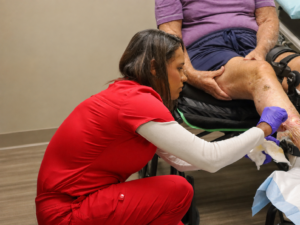
The care team will carefully examine the wound and the surrounding skin. This assessment may include documenting the wound’s:
- Location
- Length, width, and depth
- Appearance and tissue condition
- Amount and type of drainage
- Odor
- Surrounding redness, swelling, or discoloration
- Signs of pressure or repeated friction
Measurements taken during the first appointment provide a starting point for monitoring progress. The wound may be measured again during follow-up visits to determine whether it is responding to treatment.
Evaluating circulation and sensation
Healthy blood flow is essential because healing tissue needs oxygen and nutrients. Depending on the wound’s location and your medical history, the team may examine the skin’s temperature and color, check pulses, or recommend additional circulation testing.
Sensation may also be evaluated, particularly when diabetes or nerve damage is a concern. Reduced sensation can make it difficult to notice a foot injury, pressure point, or worsening wound.
If more specialized evaluation is needed, the wound-care team may coordinate care with vascular specialists, podiatrists, infectious-disease providers, or other clinicians.
Cleaning and treating the wound
The wound may be gently cleaned during the appointment. If dead, damaged, or contaminated tissue is interfering with healing, debridement may be recommended when clinically appropriate.
Debridement is the removal of unhealthy tissue from a wound. The method used depends on the wound, the patient’s health, circulation, and other clinical considerations. Your provider should explain the recommended approach and what you may feel during the procedure.
An appropriate dressing may then be applied to protect the area, manage drainage, and support the healing environment.
Identifying barriers to healing
A wound may heal slowly for several reasons. During the first appointment, the care team will look for factors such as:
- Poor circulation
- Infection
- Swelling
- Repeated pressure or friction
- Elevated blood sugar
- Limited mobility
- Inadequate nutrition
- Other medical conditions
- Previous radiation injury
Identifying these barriers helps the team treat more than the wound’s surface.
Creating an individualized treatment plan
After the assessment, your provider will discuss a plan based on your specific needs. Treatment may include:
- Advanced dressings or topical therapies
- Debridement
- Compression and swelling management when appropriate
- Off-loading or pressure reduction
- Ultrasound misting when clinically appropriate
- Cellular or tissue-based wound products when indicated
- Infection management
- Nutrition or glucose-management support
- Coordination with other medical specialists
For qualifying conditions, hyperbaric oxygen therapy may also be considered as one component of a comprehensive treatment plan. It does not replace good wound care and is not appropriate for every wound.
Instructions for caring for the wound at home
Before leaving, you should receive instructions explaining how to care for the wound between appointments. These may cover:
- How and when to change the dressing
- Whether the wound should be kept dry
- Activity or weight-bearing restrictions
- Pressure-relief or repositioning recommendations
- Signs that require a call to the care team
- When to return for follow-up
Ask questions if any part of the plan is unclear. Understanding how to care for the wound at home is an important part of treatment.
Preparing for your appointment
To help the visit go smoothly:
- Bring identification and insurance information.
- Bring a current list of medications and allergies.
- Bring relevant medical records if requested.
- Wear clothing that allows the wound to be accessed easily.
- Follow any instructions about keeping or removing the existing dressing.
- Write down questions you want to ask.
- Consider bringing a family member or caregiver if they help with your wound care.
Do not remove a dressing before the visit unless the wound-care center instructs you to do so.
What happens after the first visit?
Wound healing usually requires ongoing monitoring rather than a single appointment. At follow-up visits, the team may remeasure the wound, evaluate its response, update the dressing plan, and address any new barriers to healing.
The frequency and duration of treatment will depend on the type of wound, your overall health, and how the wound responds.
Take the next step toward healing
A wound that is not improving deserves a closer look. A comprehensive wound-care evaluation can help identify why healing has stalled and determine which treatments may be appropriate.
If you have a non-healing, complex, or recurring wound, ask your healthcare provider whether a specialized wound-care evaluation is right for you.
Recent Comments